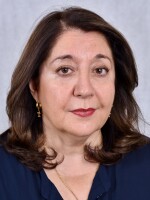
LEILA FADEL, HOST:
Now we turn to Lebanon, where Pope Leo XIV is on his first international trip as pope. On Monday, he visited the tomb of a Catholic saint, met Catholic clergy, religious officials from other faiths and with Lebanese youth. Correspondent Jane Arraf joins us from Beirut after attending one of his final events, a huge Mass at the Beirut waterfront. Good morning, Jane.
JANE ARRAF, BYLINE: Good morning, Leila.
FADEL: OK. So you were there. What was the atmosphere at the Mass like?
ARRAF: Well, it was - you know, use an overused word but relevant today - there was joy, joy by the thousands and thousands of devout Catholics and others. There were soldiers there on guard. There were UNIFIL peacekeepers. There were domestic workers. And it was really a chance to revel in this occasion, this historic visit, really, by the pope. The location, Leila, was very near the site of the port explosion five years ago...
FADEL: Yeah.
ARRAF: ...When a warehouse with ammonium nitrate exploded, killing about 200 people. So Lebanon has been through a lot. There's been the financial crisis, the port explosion, COVID and then war with Israel. But the pope told worshippers he understood what they were going through.
(SOUNDBITE OF ARCHIVED RECORDING)
POPE LEO XIV: (Speaking French).
ARRAF: Speaking in French, he said that the country was overshadowed by its many problems, fragile, unstable politics. He referred to the economic crisis, and he has referred relatively frequently while he's been here to the fighting that is still ongoing, although in an indirect way in his speeches. But Israel is still launching regular attacks, and they're in the South mostly, where the pope did not go. And that was...
FADEL: Right.
ARRAF: ...Disappointing to a lot of Christians there.
FADEL: Yeah. There are Christians in the South. I mean, the central message of the pope's trip, which started in Turkey, has been blessed are the peacemakers. And Lebanon certainly is a country that needs peace, where, as you point out, despite a ceasefire deal with Israel, there have been constant Israeli strikes. Will this message have any impact?
ARRAF: Yeah. That's the question, isn't it? I mean, people here are living in fear, and you know what? There's a really specific fear today. It is that as soon as the pope leaves, Israel is going to attack again. Just two weeks ago, it attacked south Beirut, killing a Hezbollah leader. I spoke to one woman, though, after the Mass. Her name was Rabab Hatat (ph).
RABAB HATAT: I came here because I wanted to be among people who are hopeful, hopeful for peace. And I was hoping that this would be contagious because we are in a stage where most people in Lebanon are really very desperate.
ARRAF: She recognized that if you thought rationally, no, it wouldn't change anything, but it did make her feel better.
FADEL: What is it like for Christians in Lebanon? And for those who don't know, Christians aren't a small minority. It's a huge portion of the population there.
ARRAF: It is. I mean, as you know, there hasn't been a census in many, many, many years.
FADEL: Yes.
ARRAF: But they're thought to be about 30%, and it's the biggest percentage in the Middle East. So, you know, a lot of countries in the region, Christians are a very careful community. Here, they kind of - they're free to worship. They have a considerable role in politics, and it's very different here.
FADEL: And other highlights of the visit?
ARRAF: So, yeah, his visit to young people. And as you might imagine, Leila, it was very energetic. It was very forward-looking, even though they referred to some of the tragedies that they've been through here. The pope said to them, he wondered if they regretted inheriting a world torn apart by war and disfigured by social injustice.
FADEL: Correspondent Jane Arraf in Beirut. This is NPR News. Transcript provided by NPR, Copyright NPR.
NPR transcripts are created on a rush deadline by an NPR contractor. This text may not be in its final form and may be updated or revised in the future. Accuracy and availability may vary. The authoritative record of NPR’s programming is the audio record.