


Peter Friederici
Peter Friederici is a writer whose articles, essays, and books focus primarily on connections between humans and their natural surroundings. His most recent book is Beyond Climate Breakdown: Envisioning New Stories of Radical Hope (MIT Press, 2022). He also teaches classes in science communication and sustainable communities at Northern Arizona University.
-
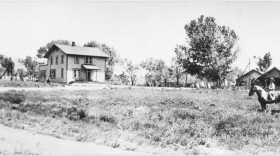 A historic Chino Valley farm that supported Fred Harvey’s railroad dining empire over a century ago is on track to become part of a new state park.
 -
 CO₂ levels topped a record high of 430 ppm in May. It’s bad news for ecosystems, but could mean wetter summers for some regions.
 -
 Rain comes when water molecules in the atmosphere clump together to form ice crystals or water droplets that are heavy enough to fall to the ground. But what causes that clumping to happen?
 -
 Monsoon season is underway. Meteorologists have identified a pattern that brings hope to those longing for a lush summer this year.
 -
 Arizona’s share of the National Old Trails Road was the first transcontinental route for newfangled motorcars, envisioned in 1912, as a wave of automobile popularity engulfed America.
 -
 For more than 20 years, bird lovers have celebrated the onset of the summer breeding season at the Verde Valley Birding and Nature Festival. This year’s event takes place the last weekend in April and is centered at Dead Horse Ranch State Park.
 -
 It’s hundreds of thousands of miles from Arizona’s San Francisco Volcanic Field to the Moon. But strong ties bind these two places.
 -
 In far northwest New Mexico, old farming traditions are meeting young appetites—and it’s a meeting where everyone wins.
 -
 Sometimes a sheet of plastic not much thicker than a sheet of paper can make all the difference for a growing plant. On the sunbaked lands of the Navajo Nation, a hoop house garden can be an important way to provide good nutrition.
 -
 Officials at Utah's Zion National Park had hoped this summer's monsoon runoff would help solve a simmering problem: a toxic outbreak of cyanobacteria.


