Arizona Public Radio | Your Source for NPR News
Play Live Radio
Next Up:
0:00
0:00
0:00 0:00
Available On Air Stations

U.S. Bureau of Reclamation

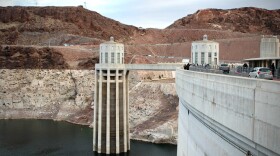
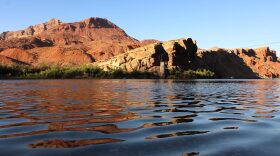
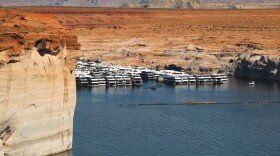
  • A new plan for managing the shrinking Colorado River is here, and it will mean big cuts for Arizona’s water supply. The federal government announced the details of its strategy to rein in demand for the river’s water through 2027 and 2028.A new plan for managing the shrinking Colorado River is here, and it will mean big cuts for Arizona’s water supply.The federal government announced the details of its strategy to rein in demand for the river’s water through 2027 and 2028. Arizona, California and Nevada will be forced to take less, with the most significant reductions coming for cities in the Phoenix and Tucson areas.While Arizona will be forced to take cuts, the state is actually avoiding much bigger ones.The Bureau of Reclamation, the federal agency which manages reservoirs and dams across the West, announced an outline of its cutback plans in July. The outline gave the agency the ability to cut water for Arizona, California and Nevada by up to 40% each year. The cuts announced today will reduce their annual water supply by about 20%.The federal government is reducing water deliveries to those states by 1.25 million acre-feet each year.Arizona will take the largest cuts under the new plan. Arizona’s supply will be reduced by 760,000 acre-feet per year. California’s will be reduced by 440,000 acre-feet per year and Nevada’s by 50,000 acre-feet per year.Additionally, the states are volunteering to cut back more water — at least 700,000 acre-feet total across the two years.An acre-foot is roughly the amount of water it would take to cover a football field with one foot of water. The Arizona Department of Water resources says one acre-foot is roughly a year’s supply of water for three homes in the Phoenix area.Despite the sharp cuts, most residents of towns and cities forced to take less water probably will not notice changes. Utility leaders around Central Arizona have seen these cuts coming for years and have taken big, expensive steps to secure backup supplies and soften the blow of Colorado River reductions. They will turn to stored groundwater, supplies from the nearby Salt River, and a complex web of transfers and exchange agreements that will keep even the most vulnerable of cities from going dry.The cutbacks come after state negotiators failed to agree on a plan for managing water. Representatives from each of the seven states that use the Colorado River had been meeting behind closed doors for years, hoping to find consensus for a plan to bring down demand. They were unable to do that, leaving the federal government in an uneasy and unprecedented position.Reclamation, then, had to put forth its own plan. It walks a tightrope — attempting to cut back on demand enough to protect the nation’s two largest reservoirs, Lake Powell and Lake Mead, without overstepping the government’s limited legal authority on the river and triggering a lawsuit from an aggrieved state.“These decisions give them the stable and flexible foundation to continue to operate and serve the various folks that they serve with these water deliveries over the next two years,” said Andrea Travnicek, Reclamation’s assistant secretary for water and science. “But then also have a framework that has a lot of new tools in the toolbox that will help with flexibility as we see changing conditions out there.”After Arizona, Colorado and Nevada — collectively known as the Lower Basin — learned that the federal government would likely target them with the brunt of cuts, they put forth a proposal that offered some mandatory reductions to their take from the river, but softened the impact by implementing those cuts on their terms.The plan announced today is the result of negotiations between those states and Reclamation. Travnicek said the federal government “accepted almost everything” from the Lower Basin’s proposal.The federal plan does not include mandatory cutbacks from the river’s Upper Basin states of Colorado, New Mexico, Utah and Wyoming. Those states argue that, because they are legally required to send a certain amount of water to their downstream counterparts, they are already taking cuts when mother nature leaves them with dry, low-snow winters.A new plan for the Colorado River was needed, as the massive reservoirs which store its water shrunk to record lows. Lake Mead, which straddles the Arizona-Nevada border near Las Vegas, recently fell to the lowest it has been since it was filled about 90 years ago.Much Colorado River policymaking over the past few years has been focused on keeping water levels at Lake Powell, which straddles the Utah-Arizona border, from falling too low to produce hydropower. The new plan aims to keep Lake Powell water levels above 3,510 feet, which is 20 feet higher than the intakes for hydroelectric generators. That represents a relatively slim margin, but a larger one than some previous plans, which aimed to keep water ten feet higher than the intakes.“It gives a little bit more decision space to see what might be happening while we continue to be in this prolonged drought,” Travnicek said.Low reservoir levels are the result of an imbalance between supply and demand. For about 26 years, climate change and drought have meant less water flowing into those reservoirs. Humans have not done enough to take less water out in response.The previous set of rules for managing the river expire at the beginning of October, and the guidelines announced today represent the first two years of a 10-year strategy that will replace the expiring one. Climate and policy experts have spent the past few years calling for a long-term strategy with major reductions to water demand across the region. This plan does not do that. Instead, it covers the next 10 years, forcing the states that use the Colorado River to come back to the table and tweak the plan every two.After contentious talks that saw state negotiators spend the better part of two years in virtually total deadlock, they may not be eager to resume meetings soon, as required by this new plan. Federal officials said they want to keep working with states. If the seven states all agree on a new plan for sharing water, it could supersede the guidelines announced today. At a minimum, Reclamation will try to get states to put their heads together on the next two years of water management after today’s rules expire in 2028.“We continue to see a prolonged drought in our future,” Travnicek said. “So continuing to work together as a whole within the basin is going to be extremely important.”Travnicek said her agency will spend this fall looking into water-saving projects that states suggested in a wide-reaching wishlist earlier this year.
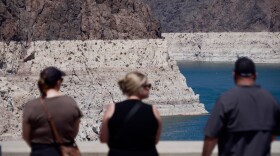
  • Lake Mead, the largest reservoir in the United States, has plummeted to its lowest water level since it was filled some 90 years ago, another sign of the crisis plaguing the Colorado River system.
  • Politicians and water officials say the plan could devastate Arizona's water supply, and pushed the federal government to adopt a counterproposal from the three Lower Basin states.
  • Arizona, California and Nevada would take less water from the Colorado River under a proposal announced Friday by the federal government to stave off crisis in the beleaguered waterway.
  • Environmental advocates worry about the future of cool mix flows, which send water from Lake Powell to protect threatened humpback chub in the Grand Canyon.
  • Two environmental groups worry that as drought causes Lake Powell's levels to drop infrastructure at Glen Canyon Dam could threaten water deliveries downstream.
  • The U.S. Bureau of Reclamation is taking public comment on a proposal to disrupt the spawning of a nonnative fish in the Grand Canyon by releasing spikes of cool water from Glen Canyon Dam. Many in the Colorado River community want more options.
  • The U.S. Bureau of Reclamation announced its plan for dealing with nonnative smallmouth bass in the Colorado River. The agency wants to release cool water from Glen Canyon Dam to disrupt the fish’s life cycle.
  • After nearly 55 years, the land leased for the Navajo Generating Station by the U.S. Bureau of Reclamation and five utilities has been returned to the Navajo Nation.
  • The Bureau of Reclamation has released an early report about the future management of the Colorado River. The federal agency gathered more than 24,000 letters with input from water users across the region.